Beginner Projects
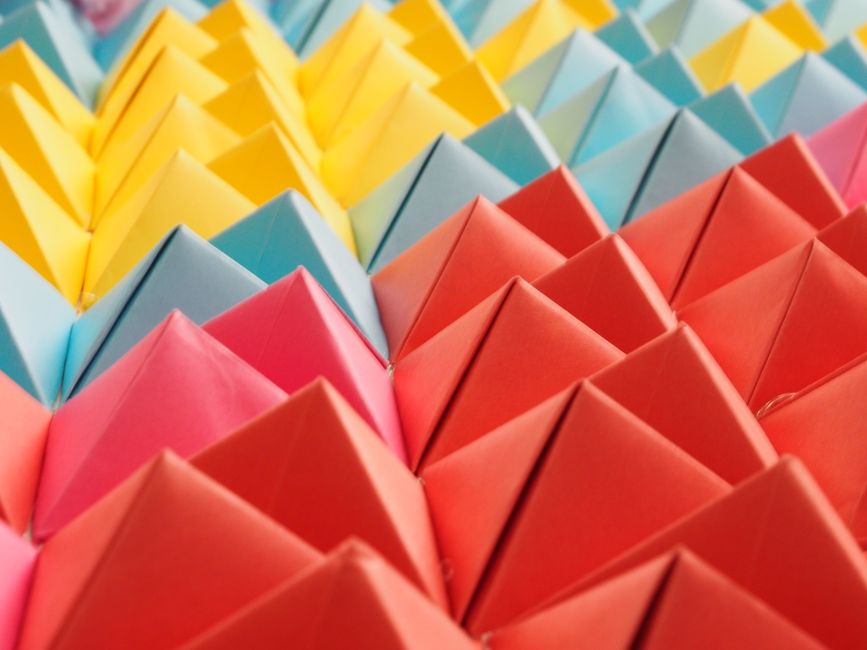
One of the quiet joys of origami is how little you need to get started. No expensive tools, no messy supplies, just paper and your hands. But the paper you choose really does change the experience. Fold a complex model with the wrong sheet and you will fight every crease. Choose well, and the paper almost seems to help you along. Here is a friendly rundown of the options you will meet as a beginner.
Traditional origami paper, often called kami, is thin, square, and usually colored on one side. It holds a crease well and comes in packs of dozens of sheets, which makes it perfect for practicing. Because it is lightweight, it works beautifully for small and medium models. If you are just starting out, a pack of standard six-inch kami is the single best purchase you can make.
Foil paper has a metallic coating that makes folds crisp and shiny, and it holds its shape almost like wire. It is wonderful for display pieces, but it can be slippery and unforgiving, so save it for when you are comfortable with a model. Washi paper, made in Japan, is softer and more textured, with beautiful patterns. It is a pleasure to fold, though it can be thicker, so it suits simpler shapes and decorative projects.
You do not need special paper to start. Printer paper cut into squares works fine for simple models, though it is a bit thick for small folds. Magazine pages and wrapping paper can be cut into squares and give you fun patterns for free. Just avoid anything too stiff, like cardstock, which cracks when you try to make sharp points. Newspaper is thin but tears easily, so it is best for very large practice folds.
Size matters too. A six-inch square is the classic beginner size, large enough to see what you are doing but small enough to handle. If a model has many steps and gets bulky, try a larger sheet, around eight or ten inches. Smaller paper, around three inches, is adorable for tiny cranes and stars but demands steady fingers.
You do not need a huge collection. Start with one pack of kami in mixed colors, add a sheet or two of foil and washi when a project calls for them, and keep a pair of scissors and a bone folder nearby for the occasional cut or sharp crease. Store your paper flat, away from damp, so it stays smooth. With a modest stash like this, you can fold almost anything you see in a tutorial, and you will quickly learn which paper feels right in your hands.
